
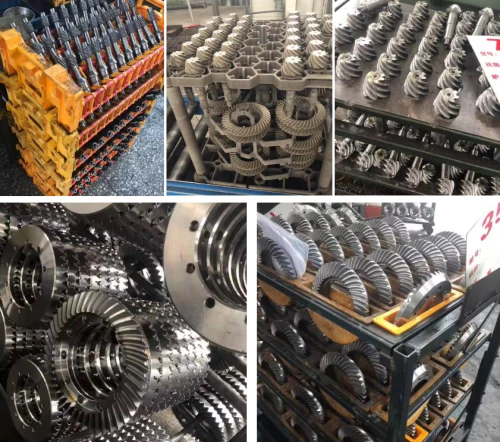
Gear Serong (Standard Eropah)

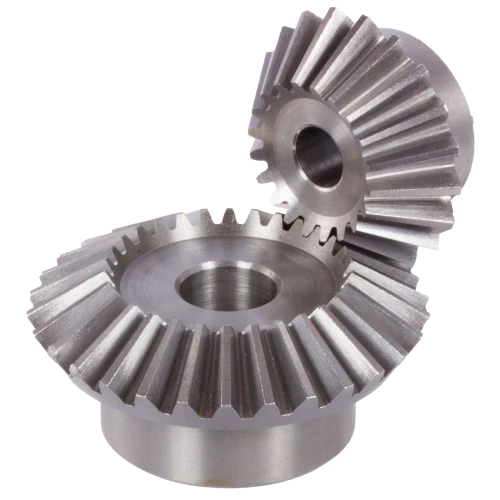
A bevel gear is a type of gear that has teeth that are cut on a conical surface. Unlike spur gears, which have teeth that are cut on a flat surface parallel to the axis of rotation, bevel gears have teeth that are cut on a conical surface perpendicular to the axis of rotation. This allows bevel gears to transmit motion and power between intersecting or non-parallel shafts. Bevel gears are commonly used in various mechanical systems, such as automotive differentials, power tools, printing presses, and industrial machinery, where the direction of rotation needs to be changed or the torque needs to be transferred between shafts at different angles. They are available in different configurations, including straight bevel gears, spiral bevel gears, and hypoid bevel gears, each having different characteristics and applications.n

Bevel Gears Type A: 1:1, 1:2, 1:3, 1:4

n n

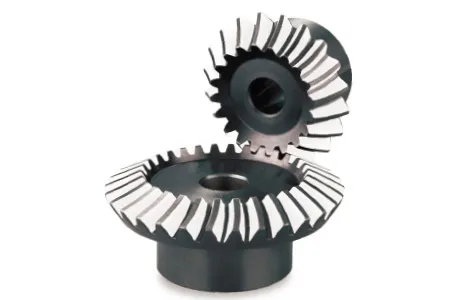
Bevel Gears Type B: 1:1, 1:2, 1:3, 1:4

n n

Here are some of the key advantages of bevel gears:

n1. Angular power transmission: Bevel gears are specifically designed to transmit power between intersecting or non-parallel shafts, allowing for efficient angular power transmission. They can change the direction of rotation and transmit torque at different angles, making them suitable for applications where shafts need to intersect or change direction.nn2. Compact design: Bevel gears have a compact design that allows for efficient use of space in mechanical systems. They can transmit power in a more compact manner compared to other gear types, such as worm gears or belt drives.nn3. High efficiency: Bevel gears have relatively high efficiency levels, which means they can transmit power with minimal energy loss. This is especially beneficial in applications where efficiency is crucial, such as automotive differentials or power transmission systems.nn4. Versatility: Bevel gears come in different configurations, such as straight bevel gears, spiral bevel gears, and hypoid bevel gears. This versatility allows for a wide range of applications and the ability to customize the gear design based on specific requirements.nn5. Smooth operation: Bevel gears, especially spiral bevel gears, provide smoother and quieter operation compared to other gear types. The spiral teeth engagement reduces noise and vibration, resulting in improved overall system performance.nn6. High load capacity: Bevel gears are capable of handling high loads and transmitting significant amounts of torque. They are commonly used in heavy-duty applications where high load-carrying capacity is required.nn7. Precise motion control: Bevel gears offer precise motion control due to their accurate tooth profile and high manufacturing tolerances. This makes them suitable for applications that require precise positioning or synchronization of mechanical components.nn8. Durability and reliability: Bevel gears are designed to withstand heavy loads, shocks, and impacts. With proper material selection, heat treatment, and lubrication, they can exhibit excellent durability and long service life.nn9. Easy maintenance: Bevel gears are relatively easy to maintain and service. Lubrication and inspection of tooth wear are typically the primary maintenance tasks, which can be performed without disassembling the entire system.n

Gear Serong

n

The manufacturing process of bevel gears typically involves the following steps:

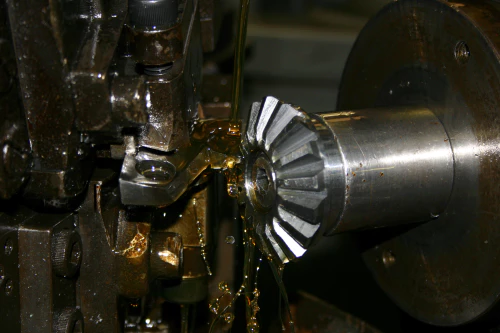
n1. Design: The first step is to design the bevel gear based on the specific application requirements. The design includes determining the gear ratio, tooth profile, dimensions, and other parameters.nn2. Material selection: The appropriate material for the bevel gear is selected based on factors such as load capacity, wear resistance, and cost. Common materials include steel alloys, cast iron, and non-ferrous metals.nn3. Gear blank preparation: A gear blank, which is a cylindrical or conical piece of the selected material, is prepared. It is usually done by machining or forging processes.nn4. Gear cutting: The gear teeth are cut into the gear blank using various methods. The most common methods include:nna. Gleason method: In this method, a gear-cutting machine with a rotating cutter and a generating process is used to create the tooth profile. The gear blank and the cutter are positioned at specific angles to generate the desired tooth geometry.nnb. Coniflex method: This method uses a special cutter with a curved shape that can generate both the tooth profile and the tooth depth. The gear blank and the cutter are set at specific angles to achieve the desired tooth geometry.nnc. Face milling method: In this method, a milling cutter with the shape of the tooth profile is used to sequentially cut each tooth on the gear blank’s face. This process is suitable for small batch production.nn5. Heat treatment: After the teeth are cut, the bevel gear undergoes heat treatment processes such as carburizing, quenching, and tempering to improve its hardness, strength, and wear resistance.nn6. Finishing operations: The bevel gear undergoes additional machining operations such as grinding, honing, or lapping to improve the tooth surface finish, accuracy, and noise characteristics.nn7. Inspection and quality control: The finished bevel gear is inspected to ensure it meets the specified requirements. This involves dimensional measurement, tooth profile checking, hardness testing, and other quality control procedures.nn8. Surface treatment: If required, the bevel gear may undergo surface treatments such as coating, plating, or painting for improved corrosion resistance or aesthetics.n

Gear Serong

n

Working Principle of Bevel Gears:

nBevel gears work on the principle of transmitting power and motion between intersecting shafts that are not parallel to each other. They consist of conical-shaped teeth that mesh together when the gears rotate, transferring torque and rotational force at different angles. The meshing of the teeth creates smooth and efficient power transmission.nnThe operation of bevel gears involves two main types: straight bevel gears and spiral bevel gears. Straight bevel gears have straight-cut teeth and are primarily used for applications requiring low-speed and low-precision motion transmission. Spiral bevel gears, on the other hand, have curved teeth that are cut in a spiral pattern. This design enables gradual tooth engagement, resulting in smoother operation, reduced noise, and improved load-carrying capacity.nnGear Serongn

Selecting the Right Bevel Gear:

n1. Determine Application Requirements: Understand the specific requirements of your application, including the desired torque, speed, operating conditions (temperature, environment), and any specific design constraints. This information will help guide your selection process.nn2. Calculate Gear Parameters: Calculate the necessary gear parameters such as gear ratio, module, pitch diameter, number of teeth, and face width based on the application requirements and the power transmission needs. These calculations will ensure that the selected gear can handle the desired load and provide the required speed and torque.nn3. Consider Gear Type: Evaluate the different types of bevel gears available, such as straight bevel gears, spiral bevel gears, and hypoid bevel gears. Each type has its own advantages and limitations, so choose the one that best suits your application requirements in terms of load capacity, efficiency, noise level, and smoothness of operation.nn4. Material Selection: Consider the material options for the bevel gear based on factors like load capacity, durability, and operating conditions. Common materials used for bevel gears include steel, cast iron, bronze, and powdered metals. Select a material that can withstand the anticipated loads, provide sufficient strength, and resist wear and fatigue.nn5. Efficiency and Power Loss: Evaluate the efficiency of the gear system to minimize power loss due to friction and heat generation. Consider factors such as tooth profile, tooth surface finish, lubrication requirements, and gear geometry to select gears that offer better efficiency and reduced power loss.nn6. Noise and Vibration: If noise and vibration are critical factors in your application, consider gears with noise-reducing features, such as spiral bevel gears. These gears offer smoother operation and quieter performance compared to straight bevel gears.nnGear Serongn

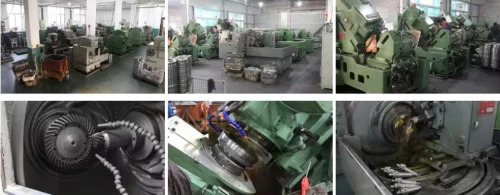
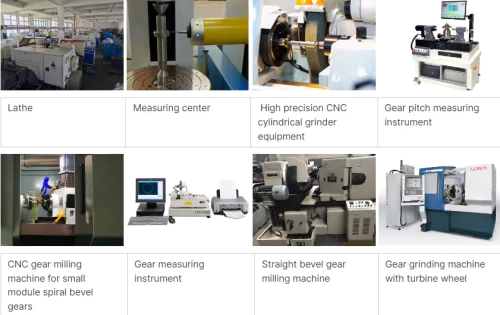
Our Factory

nBevel gear Bevel gear Bevel gear

Penerangan

Pengenalan

Bevel gears, adhering to European standards, are precision-engineered components designed to transmit power between shafts that are not parallel. These gears are typically made from high-quality materials such as carbon steel, stainless steel, or alloy steel, ensuring durability and effectiveness in various applications.

The primary uses of bevel gears include automotive drivetrains, conveyor systems, and machine tools, where they facilitate efficient power transmission with minimal friction and wear. Their ability to operate at different angles makes them versatile for a wide range of mechanical setups.

Ever-power’s bevel gears offer several advantages: they feature high load capacity, reduced noise levels, and improved efficiency, which translate into better performance and longevity. Additionally, our adherence to stringent European standards guarantees reliability and superior quality in every product.

Gear Serong (Standard Eropah)

Bevel Gears Type A: 1:1, 1:2, 1:3, 1:4


Bevel Gears Type B: 1:1, 1:2, 1:3, 1:4


Features and Applications of Bevel Gears (European Standard)

Bevel gears (European Standard) are designed to efficiently transmit motion and power between intersecting shafts, enabling changes in the direction of rotation. A bevel gear is a type of gear that has teeth that are cut on a conical surface. Unlike spur gears, which have teeth that are cut on a flat surface parallel to the axis of rotation, bevel gears have teeth that are cut on a conical surface perpendicular to the axis of rotation. Their unique design allows for high load capacity, compact configurations, and versatility across various mechanical systems, including automotive differentials, power tools, and industrial machinery. These gears deliver smooth operation, precise motion control, and durability, making them essential components in applications requiring reliable power transmission across different angles.

Manufacturing Process of Bevel Gears (European Standard)

The production process of bevel gears involves several critical steps. First, the design is created based on application requirements, including gear ratio and tooth profile. Next, suitable materials, such as steel alloys, are selected for their durability. A gear blank is prepared through machining or forging.

Then, gear teeth are cut using methods like the Gleason process. After cutting, the gear undergoes heat treatment for strength and wear resistance. Finally, finishing operations and quality inspections ensure precision, followed by any necessary surface treatments for enhanced durability.

Common Issues and Solutions for Bevel Gears (European Standard)

Isu Penyelesaian
Insufficient lubrication leading to increased wear Regularly inspect and maintain lubrication levels, using the appropriate lubricant for the application.
Misalignment causing excessive noise and vibration Ensure proper alignment of shafts and gears during installation and periodically check alignment during operation.
Tooth wear affecting performance Monitor tooth condition and replace gears when wear exceeds acceptable limits; implement proper maintenance schedules.
Overloading leading to gear failure Calculate load requirements accurately and select gears that can handle peak loads; avoid exceeding the rated capacity.
Heat generation due to friction Optimize gear design for better efficiency and ensure adequate cooling mechanisms are in place.
Inadequate tooth engagement causing noise Adjust gear settings to ensure proper tooth engagement; consider using spiral bevel gears for smoother operation.

Pilih Gear Serong Ever-power

Ever-power is a leading manufacturer known for its high-quality mechanical components, specializing in gear systems and transmission solutions. With advanced technology and a strong engineering team, the company ensures that its products meet international standards, providing reliability and durability in various applications.

Bevel gears, particularly those adhering to European standards, are one of Ever-power’s flagship products. A bevel gear is a type of gear that has teeth cut on a conical surface, allowing for efficient motion and power transmission between intersecting shafts. Ever-power offers a wide range of bevel gears, including straight, spiral, and hypoid types, catering to diverse industrial needs. These gears are designed for high efficiency and load capacity, making them suitable for applications such as automotive differentials, power tools, and industrial machinery.

Our company prides itself on exceptional customer service, offering tailored solutions and support throughout the entire process, from design to installation. We are committed to ensuring customer satisfaction by providing quality products and responsive service to meet your specific requirements.